

Top Bogie Furnace Manufacturer Advances Industrial Heat Treatment Solutions
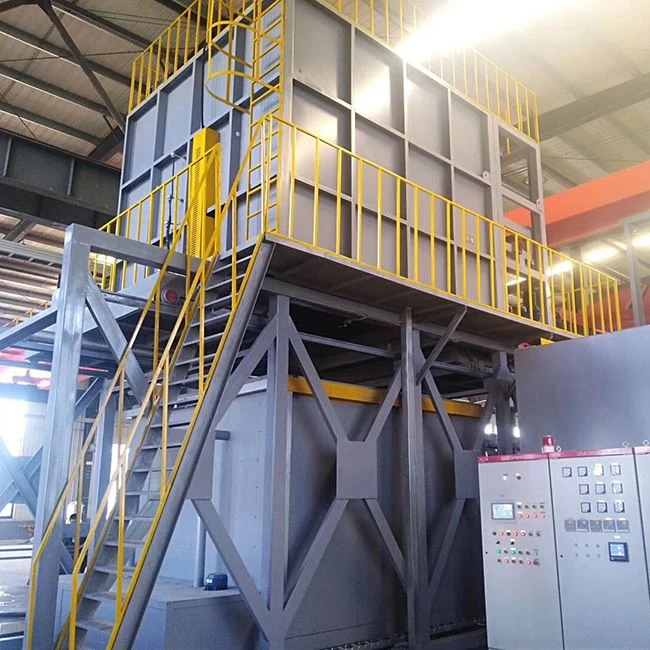
Aluminum Alloy Quenching Furnace
DANYANG, JIANGSU, CHINA, September 30, 2026 /EINPresswire.com/ --
As industrial manufacturers continue to place greater emphasis on reliable thermal processing, energy management, and consistent material performance, Jiangsu Fangwei Furnace Industry Co., Ltd. is expanding its role in the industrial furnace sector. Based in Danyang, Jiangsu Province, the company focuses on the research, development, design, and manufacturing of industrial heat treatment equipment for a variety of production requirements. Its activities reflect the continuing evolution of the industrial furnace market, where manufacturers are expected to provide equipment capable of handling different materials, workpiece sizes, production volumes, and thermal processing procedures.
Industrial furnaces play a critical role in manufacturing processes where metals and other materials need to undergo controlled heating, holding, cooling, annealing, quenching, tempering, normalizing, or related thermal treatments. The quality of a heat treatment process can directly influence material properties, dimensional stability, surface condition, and subsequent manufacturing performance. As a result, furnace selection has become an important consideration for companies involved in machinery, automotive components, metal processing, tools, molds, casting, forging, and other industrial applications.
Within this environment, Jiangsu Fangwei Furnace Industry Co., Ltd. provides a range of industrial furnace solutions designed around different heat treatment requirements. Its product portfolio includes Box Furnace and Quenching Furnace equipment, alongside other furnace configurations for specialized thermal processing applications. The company's product range reflects the need for manufacturers to select furnace structures according to the characteristics of their workpieces and the thermal treatment processes involved.
A Box Furnace is commonly used for batch heat treatment operations in which workpieces are placed inside a chamber and processed according to a defined heating and holding cycle. Such furnaces can be applied to processes including annealing, normalizing, tempering, and quenching, depending on the furnace configuration and process requirements. The enclosed chamber structure provides a controlled heating environment and can accommodate different workpiece shapes and production requirements.
For industrial users, the flexibility of a Box Furnace can be particularly relevant when production involves different batches or workpiece specifications. Unlike continuous equipment designed around a fixed material flow, batch furnaces can provide greater adaptability for manufacturers processing components with varying dimensions, materials, or treatment schedules. This makes them useful across a broad range of metalworking operations.
The design of an industrial furnace involves numerous technical considerations. Furnace chamber dimensions, insulation structure, heating elements, temperature-control systems, loading arrangements, door construction, and heat circulation can all influence the performance of the equipment. Proper thermal insulation can also affect energy consumption by reducing heat loss from the furnace chamber. Modern furnace manufacturers therefore increasingly focus on balancing thermal performance, operating stability, maintenance requirements, and energy efficiency.
Quenching represents another important area of industrial heat treatment. Quenching generally involves heating a material to a specified temperature and then cooling it at a controlled rate to achieve desired changes in its microstructure and mechanical properties. The exact process depends on material composition, workpiece geometry, target hardness, cooling medium, and other technical factors. Furnace systems used for quenching therefore need to be selected and configured according to the specific production process.
Jiangsu Fangwei Furnace Industry Co., Ltd. includes Quenching Furnace among its product offerings, providing equipment for industrial users whose manufacturing processes require controlled high-temperature treatment followed by a defined cooling procedure. The integration of heating, temperature control, loading, and process management is important for achieving repeatable heat treatment results.
The relationship between furnace design and workpiece characteristics is particularly important in large-scale industrial applications. Heavy or oversized components may require furnace structures capable of supporting substantial loads while maintaining an appropriate thermal environment. In such applications, bogie-type or trolley-based furnace configurations can provide practical advantages for loading and unloading large workpieces. A movable hearth can allow components to be loaded outside the main furnace chamber before being moved into position for processing.
This configuration is relevant to industries that process large castings, forgings, structural components, molds, and other heavy metal parts. Instead of requiring every workpiece to be manually positioned deep inside the furnace, a movable loading platform can facilitate material handling. The overall design still needs to be matched with the weight, dimensions, temperature requirements, heating characteristics, and production workflow of the specific application.
The development of bogie furnace technology is also connected to the broader trend toward customized industrial heat treatment systems. Different manufacturing facilities can have substantially different requirements. One plant may need to process relatively small batches of metal components, while another may focus on large castings or heavy machinery parts. Furnace capacity, chamber dimensions, heating power, temperature range, atmosphere requirements, loading methods, and control systems therefore cannot always follow a single standardized configuration.
For this reason, industrial furnace suppliers increasingly work with customers to determine appropriate equipment specifications. Factors such as material type, workpiece dimensions, maximum loading weight, required heating temperature, treatment cycle, production capacity, and available factory space can all affect furnace selection. The objective is to create an equipment configuration that corresponds with the actual production process rather than relying solely on a generic furnace model.
Jiangsu Fangwei Furnace Industry Co., Ltd. has developed its business around this type of industrial furnace engineering. Public industry information identifies the company as being located in Danyang, Jiangsu, an area with a long-established industrial furnace manufacturing tradition. The company is described as engaging in industrial furnace research and development, technological innovation, and manufacturing, while also providing furnace designs based on factors such as material, dimensions, production volume, and technical standards.
The company has also been associated with a broader portfolio of thermal processing equipment. Publicly available industry information lists equipment including natural gas furnaces, vacuum bright furnaces, box furnaces, trolley furnaces, hot air circulation furnaces, pit furnaces, bell furnaces, tube furnaces, mesh belt furnaces, roller hearth furnaces, push rod furnaces, steel belt furnaces, aluminum alloy quenching furnaces, aging furnaces, crucible furnaces, and aluminum melting and holding furnaces. This variety illustrates the diverse furnace configurations required across modern heat treatment operations.
Energy efficiency has become another significant consideration for industrial furnace users. Thermal processing can require substantial energy input, particularly when large workpieces must be heated to elevated temperatures and held for extended periods. Furnace insulation, heating-system configuration, temperature-control accuracy, heat recovery, and operating procedures can all influence overall energy consumption.
Furnace manufacturers have therefore been exploring improved insulation technologies and structural designs. Jiangsu Fangwei Furnace Industry Co., Ltd. has publicly described the development and use of full-fiber furnace linings for applications including large trolley furnaces, pit furnaces, and bell furnaces. According to company-related industry information, this approach is intended to improve thermal insulation performance and reduce energy loss.
Temperature control is equally important. A heat treatment process generally requires the workpiece to reach a specified temperature and remain within an appropriate range for a defined period. Uneven heating or uncontrolled temperature changes can affect the consistency of the final material properties. Modern industrial furnaces therefore incorporate temperature measurement and control systems to help operators manage heating cycles more precisely.
The choice of heating medium is another factor that can vary according to production requirements. Industrial furnace systems may use electrical heating, natural gas, industrial gas, or other fuels. Jiangsu Fangwei Furnace Industry Co., Ltd. has publicly indicated that its equipment can be designed around different heating media and can support vacuum, protective-atmosphere, and controlled-atmosphere heat treatment configurations depending on the equipment and application.
Controlled atmospheres can be particularly relevant when the workpiece surface needs to be protected during thermal processing. Depending on the material and treatment, exposure to uncontrolled air at elevated temperatures may cause oxidation or other surface effects. Furnace configurations that incorporate controlled atmospheres can therefore provide additional process options for applications requiring specific surface or material conditions.
The industrial furnace market also continues to be influenced by automation. Digital temperature controllers, monitoring systems, programmable treatment cycles, alarms, and automated process management can help reduce manual intervention and improve repeatability. The degree of automation required varies according to the application, production volume, and technical specifications of each customer.
For manufacturers operating multiple heat treatment processes, equipment compatibility and production workflow are also important. A furnace does not operate independently from the rest of a factory. Loading systems, quenching tanks, cooling equipment, material handling, inspection, and subsequent machining processes may all need to work together. Furnace suppliers that understand this broader workflow can contribute to more integrated thermal processing solutions.
The location of Jiangsu Fangwei Furnace Industry Co., Ltd. in Danyang also places it within an established manufacturing region. Jiangsu is one of China's major industrial provinces, with extensive manufacturing activity in machinery, automotive components, metal processing, electrical equipment, and industrial equipment. Such an environment provides access to manufacturing resources and an industrial customer base that requires different types of thermal processing equipment.
International demand has further expanded the scope of industrial furnace sourcing. Manufacturers in different countries may seek equipment for automotive components, machinery parts, tools, molds, casting products, forgings, and other applications. International buyers typically consider technical specifications alongside installation requirements, maintenance, spare parts, operator training, and long-term service support when evaluating furnace suppliers.
For a furnace manufacturer, engineering capability is therefore closely connected with customer communication. Technical requirements must be translated into practical furnace specifications, including dimensions, heating power, temperature range, control method, loading configuration, and cooling arrangements. Clear communication at the design stage can help ensure that the final equipment is compatible with the customer's production environment.
As industrial production continues to demand greater consistency and efficiency, the role of heat treatment equipment is expected to remain significant. Materials used in machinery, transportation, energy, construction, and industrial components often require thermal processing before they can achieve the required mechanical properties. This creates ongoing demand for furnace systems capable of supporting different treatment processes and production scales.
Jiangsu Fangwei Furnace Industry Co., Ltd. participates in this market by providing a broad range of industrial furnace equipment, including Box Furnace and Quenching Furnace solutions. Its broader portfolio and engineering-oriented approach allow it to address different thermal processing requirements, from batch treatment of smaller components to equipment configurations designed for larger industrial workpieces.
The continued development of industrial furnace technology is likely to focus on several interconnected priorities: temperature consistency, energy efficiency, process control, equipment durability, flexible loading, and compatibility with increasingly automated manufacturing environments. For end users, these factors can influence not only the performance of the furnace itself but also the efficiency and consistency of the wider production process.
About Jiangsu Fangwei Furnace Industry Co., Ltd.
Jiangsu Fangwei Furnace Industry Co., Ltd. is an industrial furnace manufacturer based in Danyang, Jiangsu Province, China. The company focuses on the research, development, design, and production of industrial heat treatment equipment, with product categories covering Box Furnace, Quenching Furnace, trolley furnaces, pit furnaces, bell furnaces, mesh belt furnaces, and other thermal processing systems. Public industry information describes the company as having its own design and development personnel and manufacturing facilities, with furnace solutions developed according to workpiece materials, dimensions, production requirements, and technical standards.
The company's manufacturing and engineering activities are positioned around the requirements of industrial heat treatment, including different heating media and controlled thermal processing environments. For international customers and industry partners seeking further information about its equipment and capabilities, the company's website, [www.fwfurnaces.com], provides an additional source for exploring its products and business activities. Through its focus on industrial furnace engineering and heat treatment equipment, Jiangsu Fangwei Furnace Industry Co., Ltd. continues to serve manufacturers looking for adaptable thermal processing solutions for a wide range of industrial applications.
Address: No.168, HuangNian Bridge, DaoShu Town, Danyang City, JiangSu Province, China
Official Website: https://www.fwfurnaces.com/
GuiFang Jiang
Jiangsu Fangwei Furnace Industry Co., Ltd.
fangwei@fwfurnaces.com
Legal Disclaimer:
EIN Presswire provides this news content "as is" without warranty of any kind. We do not accept any responsibility or liability for the accuracy, content, images, videos, licenses, completeness, legality, or reliability of the information contained in this article. If you have any complaints or copyright issues related to this article, kindly contact the author above.
