

SIL3 Valve Actuator Planning: How STARD GEARS Supports Industrial Valve Control
SIL3 Valve Actuator Planning Starts with a Defined Safety Function
Planning for high-integrity automation requires engineers to establish the exact safety function, failure direction, worst-case valve torque, and target stroke time. A safety loop must be anchored in the operational reality of the specific piping system. Suzhou SIP Stard Automation CO.,LTD provides the mechanical options required to begin this integration.
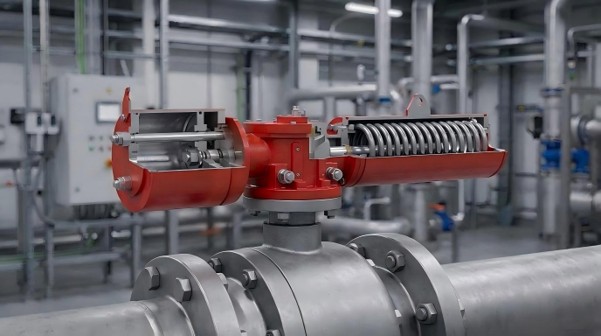
The YP series provides spring-return and double-acting configurations. For critical applications, the spring-return architecture establishes the mechanical baseline for a fail-safe return upon loss of air pressure. Whether the actuator must fail open or fail close must be explicitly determined by the facility's process hazard analysis to ensure the plant reaches a safe state.
Available torque is influenced by the valve type, the choice between symmetrical or canted yokes, available air supply pressure, and temperature. The YP series is engineered to adapt to 90° ball valves, butterfly valves, and plug valves. Engineering teams must also coordinate specifications for solenoid valves, limit switches, positioners, and diagnostic systems.
Spring-Return Architecture Supports Fail-Safe Mechanical Planning
Mechanical reliability forms the core of any fail-safe strategy. The pre-compressed spring module within the YP series provides the stored mechanical energy necessary for a reliable loss-of-air reset. This design ensures that the actuator will drive the valve to its designated safe position without relying on external power supplies.
Maintenance safety is equally critical for industrial equipment operating under high spring tension. The YP series utilizes a pre-compressed spring module design where the end caps do not bear internal pressure or spring load during routine disassembly. This significantly mitigates the risk of sudden spring release during maintenance procedures.
The choice of yoke geometry further tailors the mechanical output. Symmetrical yokes provide a balanced torque curve, while canted yokes deliver higher output at the beginning or end of the stroke. When developing a SIL loop, engineers must verify that the actuator's output capacity at the most disadvantageous air supply and extreme temperature limits still exceeds the valve's torque demand.
SIL3 Capability Requires Model-Level Safety Documentation
Claiming that equipment is suitable for a safety instrumented system requires rigorous traceability. A project designation of SIL 3 capable must correspond exactly to a verified model scope, an authoritative safety manual, validated failure rate data, and clearly defined PFD/PFH calculation boundaries. The mechanical hardware provides the physical execution, but the documentation provides the proof.
Project engineers must rigorously verify the credentials of the evaluating agency, the validity period of the certificate, hardware fault tolerance, and diagnostic coverage. A certificate that covers a base actuator model does not automatically extend to an entire modified assembly unless the modifications fall within the assessed scope.
Because the final element in a SIS comprises the valve, actuator, and accessories, the failure data for the solenoid valves and control logic must also be integrated into the overall safety integrity calculation. The valve manufacturer, the STARD GEARS engineering team, and the SIS engineering contractor must align their definitions of the safety function.
Simulation and Lifecycle Testing Support Mechanical Review
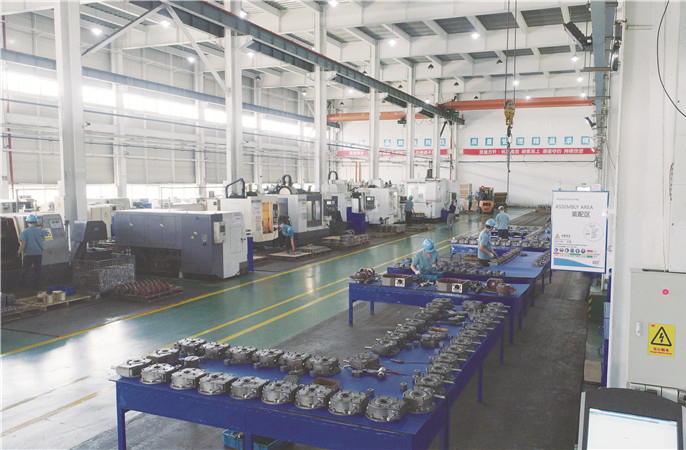
Before physical manufacturing begins, advanced engineering verification processes are necessary to ensure structural integrity. The company utilizes 3D simulation, dynamic simulation, and finite element analysis (FEA) to evaluate the load distribution and kinematic behavior of the actuator components under stress. These tools allow engineers to confirm that the spring-return configuration possesses a sound mechanical foundation.
While simulation validates the theoretical design, physical testing provides empirical evidence for manufacturing quality assurance. The manufacturing facility is equipped with dedicated torque testing and lifecycle testing equipment to verify actual output torque and evaluate the durability of the seals, bearings, and load-bearing components over continuous operational cycles.
These rigorous manufacturing and testing processes provide critical evidence for mechanical design reviews. However, it is important to distinguish between manufacturing process capabilities and functional safety assessments. While FEA and lifecycle testing prove mechanical robustness, they do not substitute for the independent failure mode analysis required for formal SIL3 functional safety approval.
Testing and Traceability Turn Safety Planning into an Approval Package
The transition from a planned safety loop to an approved, operational system requires comprehensive traceability across every stage. To secure project approval for a SIL3 application, the engineering team must compile a traceable documentation package that includes torque calculations, functional test reports, material traceability records, and detailed field acceptance criteria.
The availability of in-house torque testing and lifecycle testing equipment allows the manufacturer to generate the specific output and durability verification reports required by clients. These physical test results validate the theoretical sizing models and provide concrete evidence of the actuator's performance baseline before it is shipped.
To ensure consistency, the production process is managed through an ERP order tracking system and staged quality control protocols covering incoming materials and finished product assembly. This infrastructure links drawing approvals, production schedules, test results, and shipping documents. During final site acceptance, the commissioning team will verify the actuator's performance against this record.
SIL3 Planning Concludes with a Safety-Document Request
The spring-return mechanical architecture provided by the YP series represents a robust and highly adaptable platform that can be integrated into a SIL3 valve actuator evaluation. The pre-compressed spring modules, selectable yoke geometries, and verifiable manufacturing processes provide the physical reliability required. However, the mechanical design is only the first phase of the compliance journey; the final engineering conclusion must always be supported by a specific safety manual, validated failure rates, PFD/PFH calculations, and a clear model scope.
During technical discussions, engineering teams should preserve the core mechanical details of the YP series while maintaining a clear distinction between mechanical performance evidence and formal functional safety certification data. Both elements are essential for a successful project, but they must be evaluated using their respective regulatory criteria.
To move from mechanical planning to formal safety verification, project planners can submit their specific safety function definitions and valve torque data to the manufacturer. By consulting directly with the engineering team, buyers can request the applicable evaluation documents, finalize their loop calculations, and ensure their automation strategy is fully supported by the required compliance data. Discover the complete range of capabilities and request technical support at https://www.stard-gears.com/.
Suzhou SIP Stard Automation CO.,LTD.
STARD GEARS
email us here
Visit us on social media:
LinkedIn
YouTube
Legal Disclaimer:
EIN Presswire provides this news content "as is" without warranty of any kind. We do not accept any responsibility or liability for the accuracy, content, images, videos, licenses, completeness, legality, or reliability of the information contained in this article. If you have any complaints or copyright issues related to this article, kindly contact the author above.
